

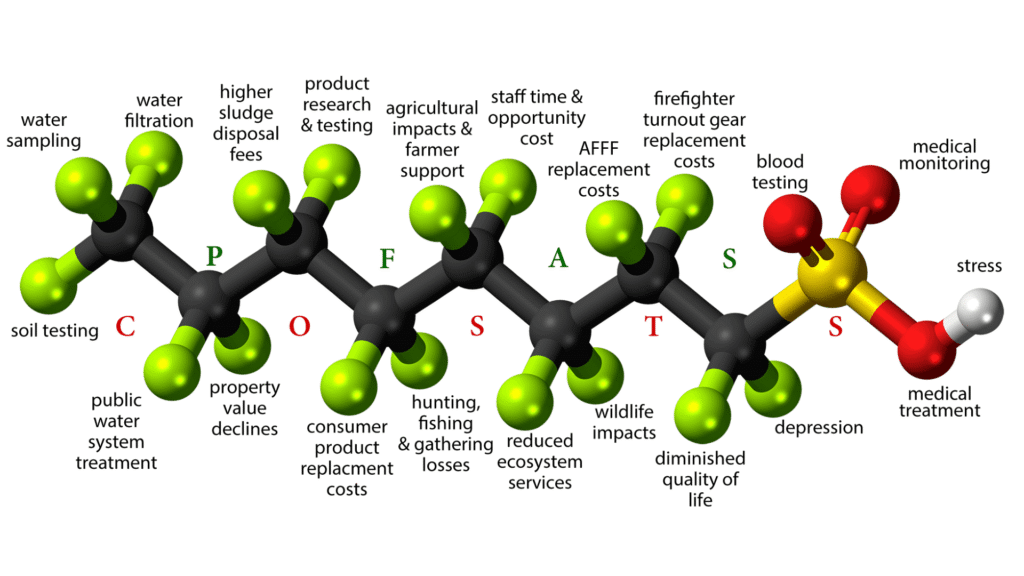
Forever chemicals, known as per- and polyfluoroalkyl substances (PFAS), are synthetic compounds used in various products due to their resistance to heat, oil, stains, and water. They have been in use since the 1940s and are commonly found in nonstick cookware, waterproof clothing, and firefighting foams.
Health Risks Associated with PFAS
Exposure to PFAS is linked to several serious health issues, including:
- Cancer (kidney and testicular)
- Liver damage
- Thyroid disease
- Fertility and fetal development issues
- Immune system effects
Most Americans have detectable levels of PFAS in their blood, raising significant health concerns.
PFAS Contamination in Drinking Water
Recent data indicates that approximately 165 million people in the U.S. are served by water systems with detectable levels of PFAS. Testing has revealed contamination in over 9,300 sites across all 50 states.
Sources of PFAS in Water
PFAS can enter drinking water through various pathways, including:
- Runoff from firefighting training sites
- Discharges from chemical manufacturing plants
- Wastewater treatment plants
Regulatory Actions
The Environmental Protection Agency (EPA) has established new standards for PFAS in drinking water, requiring public water systems to monitor and limit these chemicals. However, recent announcements indicate plans to repeal some of these protections, which has raised concerns about public health and safety.
Compliance Timeline
- Initial monitoring for PFAS is required by 2027.
- Compliance deadlines for certain standards have been extended to 2031.
Understanding the presence and risks of PFAS in drinking water is crucial for public health## Overview of Forever Chemicals
Forever chemicals, known as per- and polyfluoroalkyl substances (PFAS), are synthetic compounds used in various products due to their resistance to heat, oil, stains, and water. They have been in use since the 1940s and are commonly found in nonstick cookware, waterproof clothing, and firefighting foams.
Health Risks Associated with PFAS
Exposure to PFAS is linked to several serious health issues, including:
- Cancer (kidney and testicular)
- Liver damage
- Thyroid disease
- Fertility and fetal development issues
- Immune system effects
Most Americans have detectable levels of PFAS in their blood, raising significant health concerns.
PFAS Contamination in Drinking Water
Recent data indicates that approximately 165 million people in the U.S. are served by water systems with detectable levels of PFAS. Testing has revealed contamination in over 9,300 sites across all 50 states.
Sources of PFAS in Water
PFAS can enter drinking water through various pathways, including:
- Runoff from firefighting training sites
- Discharges from chemical manufacturing plants
- Wastewater treatment plants
Regulatory Actions
The Environmental Protection Agency (EPA) has established new standards for PFAS in drinking water, requiring public water systems to monitor and limit these chemicals. However, recent announcements indicate plans to repeal some of these protections, which has raised concerns about public health and safety.
Compliance Timeline
- Initial monitoring for PFAS is required by 2027.
- Compliance deadlines for certain standards have been extended to 2031.
Understanding the presence and risks of PFAS in drinking water is crucial for public health and safety.