

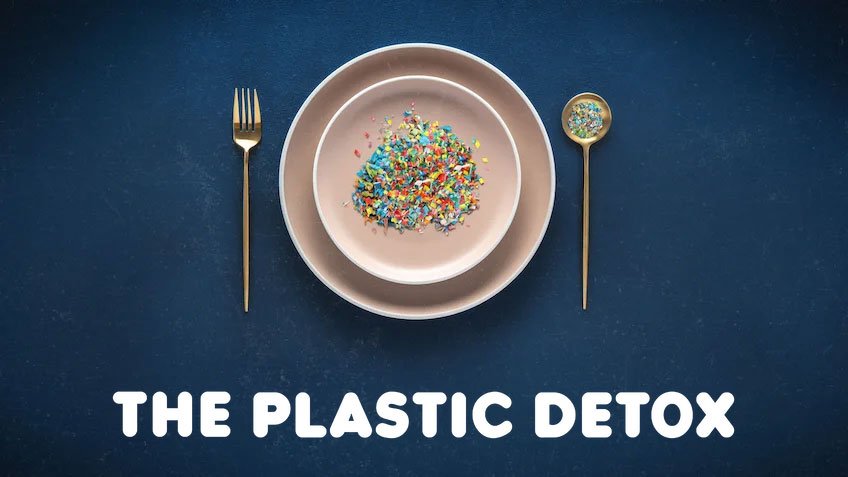
Why the science behind Count Down and Netflix’s The Plastic Detox makes the case for plastic-free, purified water.
The Conversation Everyone’s Suddenly Having
From bestselling books to a new Netflix documentary, the link between everyday plastics and human health has moved from scientific journals into mainstream conversation. At the centre of it is one of the world’s leading environmental epidemiologists — and her message has a direct, practical takeaway for how we hydrate every day.
Who Is Dr. Shanna Swan?
Shanna H. Swan, PhD, is one of the world’s leading environmental and reproductive epidemiologists and a Professor of Environmental Medicine and Public Health at the Icahn School of Medicine at Mount Sinai in New York. Across a career spanning more than two decades, she has published over 200 scientific papers examining how environmental exposures affect reproductive health. She also directs the Action Science Initiative, associated with the Million Marker Research Institute, which studies how environmental pollutants affect our health.
Count Down: The Book That Sounded the Alarm
In 2017, Dr. Swan and her team published a landmark study showing that sperm levels among men in Western countries had dropped by more than 50 percent over four decades — a conclusion drawn from 185 studies involving close to 45,000 men. Her 2021 book, Count Down, expanded on this, arguing that chemicals in our modern environment are altering human reproductive health on a vast scale.
A key focus is a group of compounds called endocrine-disrupting chemicals (EDCs) — including phthalates and Bisphenol A (BPA) — which are commonly associated with certain plastics and consumer goods. Importantly, the book isn’t only a warning: it offers practical guidance for reducing chemical exposure from everyday items, from water bottles to personal-care products.
The Plastic Detox on Netflix
Released on Netflix on 16 March 2026, The Plastic Detox follows six couples who reduced their exposure to plastic-related chemicals over three months. Using at-home exposure tests, participants measured levels of bisphenols, phthalates, and other hormone-disrupting chemicals, then made simple lifestyle swaps. Follow-up testing showed those chemical levels dropped significantly — a striking illustration of how everyday choices can change what ends up in our bodies.
What This Means for the Water You Drink
Here’s the practical bridge to daily life. Much of our plastic exposure is avoidable, and one of the most repeated pieces of guidance from this field is simple: reduce reliance on single-use plastic and avoid letting plastic come into contact with what we consume. Bottled water is a prime example — water stored in plastic, often for months, in a warm climate like the UAE’s.
Switching to filtered, bottle-free water tackles this at the source. A mains-fed purification system delivers fresh, purified water on demand — with no plastic bottles to store, heat, or throw away. It’s a low-effort, high-impact swap that aligns precisely with the kind of plastic reduction Dr. Swan and others advocate.
How Hunza Global Helps You Go Plastic-Free
At Hunza Global, reducing plastic dependence is the core of what we do. Our sustainable water solutions are designed to replace single-use plastic bottles entirely:
- Bottle-free water dispensers that connect to your mains supply — unlimited fresh water, zero plastic bottles.
- Advanced multi-stage filtration (RO + UV + carbon) that removes contaminants while eliminating the need for bottled water.
- Solutions for homes, offices, gyms, schools, hospitals and hospitality — wherever people drink water.
Every dispenser installed can eliminate thousands of single-use plastic bottles each year — better for your wellbeing and the planet at the same time.
A Balanced Word on the Science
In fairness, it’s worth noting that while Dr. Swan’s peer-reviewed academic research is widely cited, The Plastic Detox documentary itself has drawn some criticism — including that its results were described as an uncontrolled feasibility pilot and that some contributors are linked to the testing kits featured in the film. The broader science on specific chemical exposures and individual fertility is still developing. The sensible, evidence-aligned takeaway is straightforward: reducing unnecessary plastic exposure is a smart, low-risk choice — and for personal health decisions, always consult a qualified professional.
Ready to Cut the Plastic?
Make the switch that science and sustainability both point toward. Talk to Hunza Global about a bottle-free water solution tailored to your home or business.
Plastic People is a landmark feature documentary that chronicles humanity’s fraught relationship with plastic and one woman’s mission to expose shocking new revelations about the impact of microplastics on human health.
Home
Sources & Further Reading
• The Plastic Detox (Netflix) https://www.netflix.com/title/82074244
• Count Down (Simon & Schuster) https://www.simonandschuster.com/books/Count-Down/Shanna-H-Swan/9781982113674
• Million Marker Research Institute https://www.mmresearch.org
• Dr. Shanna Swan’s website https://www.shannaswan.com
Dr. Shanna H. Swan at The Joe Rogan Experience podcast- #2476
Why The Microplastics Crisis Will Only Get Worse – CNBC
Plastic production is projected to grow more than 40% over the next 15 years, and the biggest profiteers of that growth are Exxon, Shell and Saudi company SABIC. The issue is that plastic never decomposes. Instead, it just breaks down into smaller and smaller pieces called microplastics, which are being found at increasing rates in our bodies and food supply. Scientists are just beginning to understand the full scope of the threat that they pose. Watch the video to learn more about how microplastics are becoming a major concern for human health.